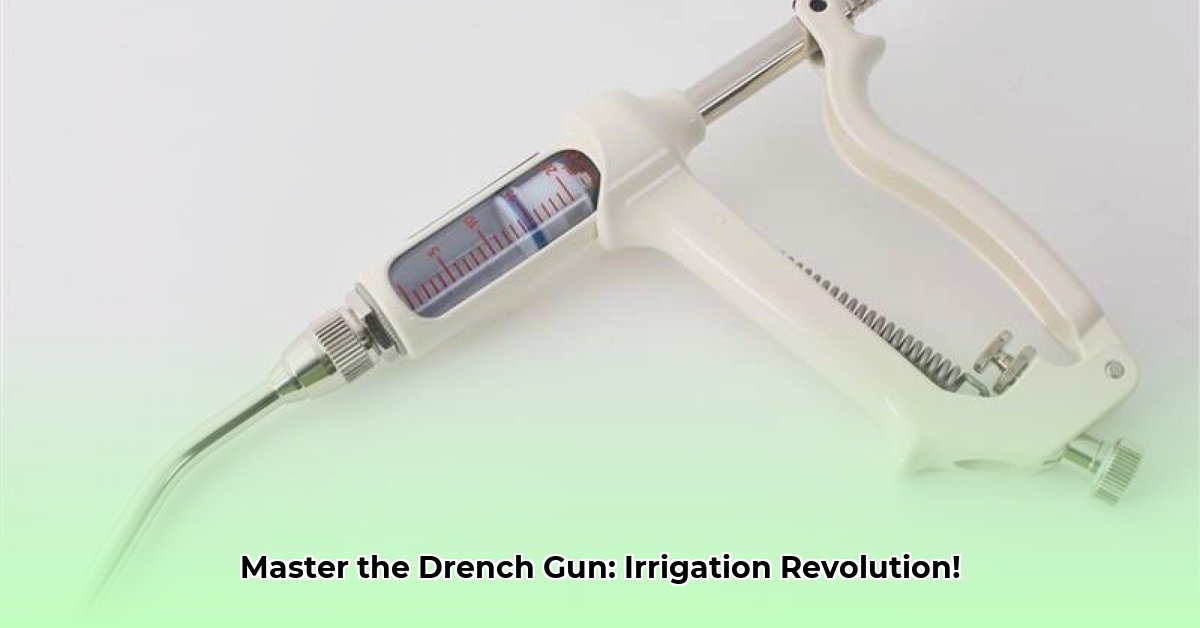
Understanding Your Drench Gun and Sustainable Irrigation
Water conservation is paramount in modern agriculture. Drench guns, readily available at Tractor Supply, offer a precise and efficient irrigation method, minimizing water waste and maximizing crop yields. For more information on fertilizers to support your irrigation efforts, check out Tractor Supply Fertilizers. This guide provides a practical, step-by-step approach to using a drench gun for sustainable irrigation practices, benefiting farmers of all sizes. We'll compare drench guns to other irrigation methods, helping you determine the best choice for your farm. Don't just irrigate; optimize your water use.
How to Use a Drench Gun Effectively
Mastering your drench gun involves a few key steps for optimal irrigation. Remember, consistent, thorough watering is key to healthy crop growth.
Step 1: Preparation is Key: Before you begin, inspect your drench gun for wear and tear. Ensure your water source is securely connected and operating at the correct pressure. Avoiding this initial step often leads to wasted water and inefficient irrigation.
Step 2: Nozzle Selection: Your drench gun likely includes several nozzles. Select the appropriate nozzle for your crops and soil type. Delicate seedlings require a gentler spray, while more mature plants may tolerate a more forceful stream. Experimentation is key to finding what works best.
Step 3: The Art of the Drench: Hold the drench gun close to the plant base, applying water slowly and steadily. Avoid strong, direct blasts, as this can damage plants or erode the soil. Aim for consistent, thorough saturation. "A gentle soaking is better than a forceful deluge," advises Dr. Emily Carter, Agricultural Engineering Professor at Purdue University.
Step 4: Pressure Management: Excessive pressure can lead to soil erosion and plant damage. Start with a low pressure and gradually increase until you achieve the necessary saturation level. Overwatering can be as harmful as underwatering. Do you know how much water is really necessary for optimal growth? Carefully monitoring your water usage and plant response throughout the season will fine-tune your technique.
Step 5: Strategic Coverage: Water methodically, ensuring even coverage across the entire area. Slight overlap between passes helps create uniform moisture, promoting even growth. Consistent watering is essential for healthy development.
Step 6: Post-Watering Procedures: After use, flush the drench gun with clean water to remove debris and mineral buildup, preventing clogging and nozzle damage. This simple cleaning step extends the life of your equipment significantly. Store the drench gun in a dry, protected place, away from extreme temperatures and direct sunlight.
Drench Gun Maintenance and Troubleshooting
Regular maintenance ensures peak performance and extends the lifespan of your drench gun.
Cleaning: After each use, thoroughly flush the gun with clean water. Remove any clogs or sediment that may affect water flow.
Repair: Inspect hoses and seals for wear and tear. Address cracks or leaks promptly to avoid water loss and prevent further damage.
Storage: Store in a dry area, protected from extreme temperatures and UV exposure.
Comparing Drench Guns to Other Irrigation Methods
While drench guns provide precise water application, other methods offer different advantages and disadvantages.
| Irrigation Method | Advantages | Disadvantages | Water Efficiency |
|---|---|---|---|
| Drench Gun | Precise, versatile, relatively cheap | Labor-intensive, not ideal for large areas | High |
| Drip Irrigation | Highly efficient, minimal waste | High initial cost, prone to clogging | Very High |
| Flood Irrigation | Simple, low initial cost | Inefficient, high waste, soil erosion | Low |
| Sprinkler Irrigation | Covers large areas quickly | Uneven distribution, high evaporation | Moderate |
Choosing the right method depends on factors including farm size, crop type, and budget. Drench guns are often an excellent choice for smaller farms or supplemental watering.
Case Study: Increased Yields with Precision Irrigation
One farmer in central California reported a 15% increase in tomato yield after switching from flood irrigation to a system utilizing drench guns. This increase directly correlated with more efficient water distribution to the plants.
Maximizing Return on Investment (ROI) with Precision Irrigation
Precision irrigation systems, including drench guns, can significantly impact your farm's profitability. Investing in precision irrigation can boost your yields and lower your water expenses. Before purchasing a drench gun, consider your budget and the long-term costs associated with its operation. Accurate cost accounting and yield tracking are critical for measuring your ROI. A well-maintained drench gun, used correctly, can provide a substantial return on investment over time.
Conclusion
Drench guns from Tractor Supply offer a practical, cost-effective approach to irrigation that promotes water conservation and increases crop yields. By following these guidelines, you can maximize the effectiveness of your drench gun, ensuring your crops receive the optimal water supply for optimal growth. Remember every drop counts!